













VisQuest

Thesis Project

Industrial Designer

10 weeks

1

VisQuest

Thesis Project

Industrial Designer

10 weeks

1

Individuals with ADHD may attempt to mask their difficulties by focusing their energy on work or studies, resulting in depleted energy levels that negatively impact other areas, such as household tasks. This, in turn, can contribute to adverse effects on the individual's well-being, both physically, such as developing allergies, and mentally, including increased stress, shame, depression, and anxiety.


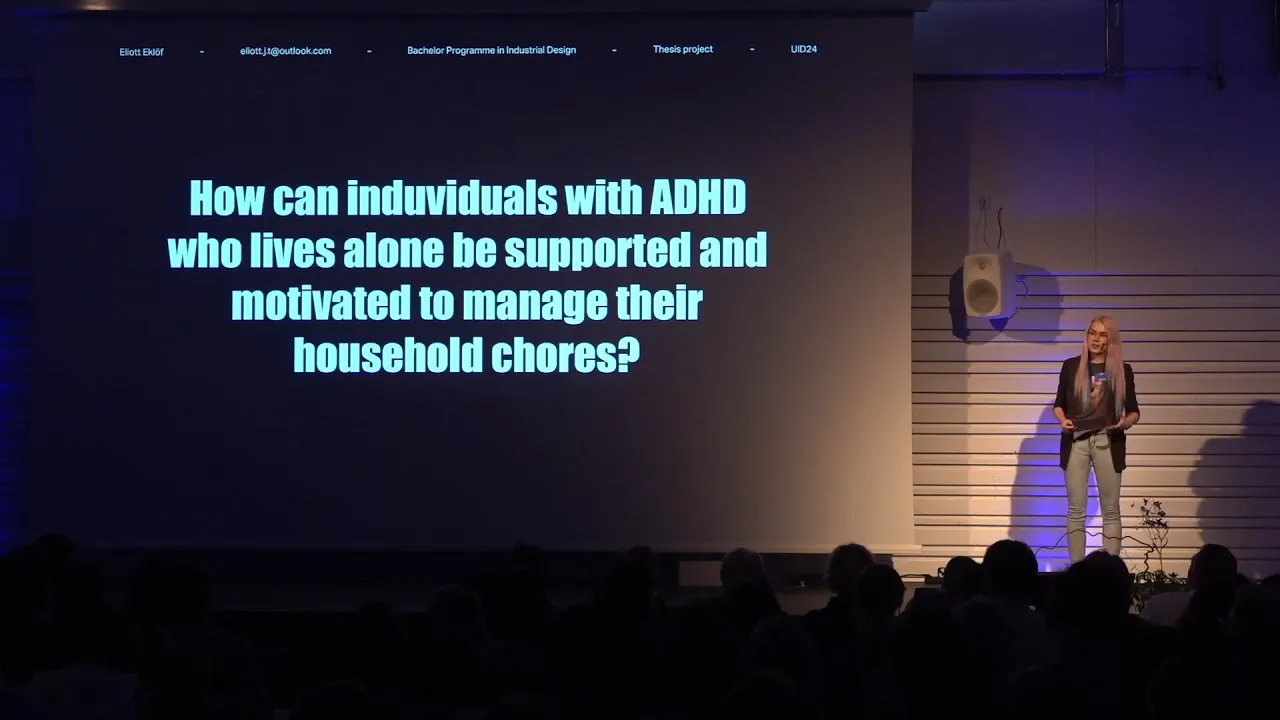
This is my thesis project from when I studied Industrial Design at Umeå Institute of Design, where I aimed to answer the question "How can individuals with ADHD who lives alone be supported and motivated to manage their household chores?"


This project was in collaboration with Abilia, which is, among other things, the leading company in Sweden when it comes to cognitive aids. I also worked with occupational therapists from Norrland University Hospital specialized in Neuropsychiatry.

Progress

Progress

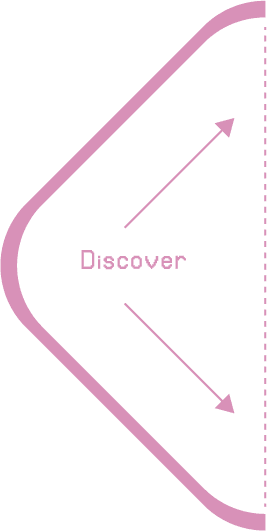
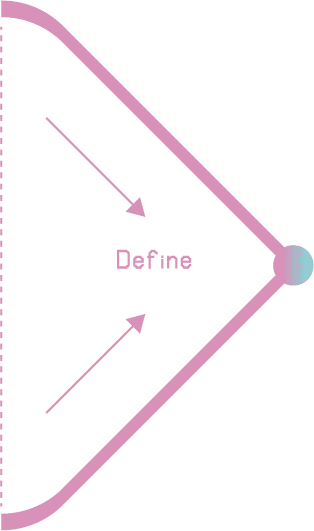
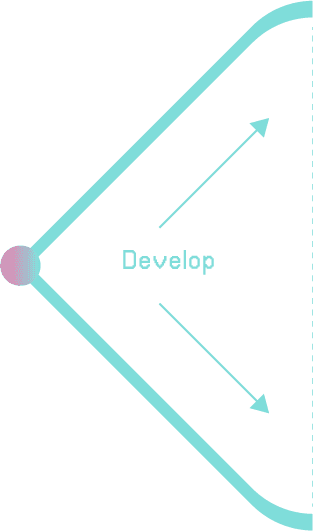
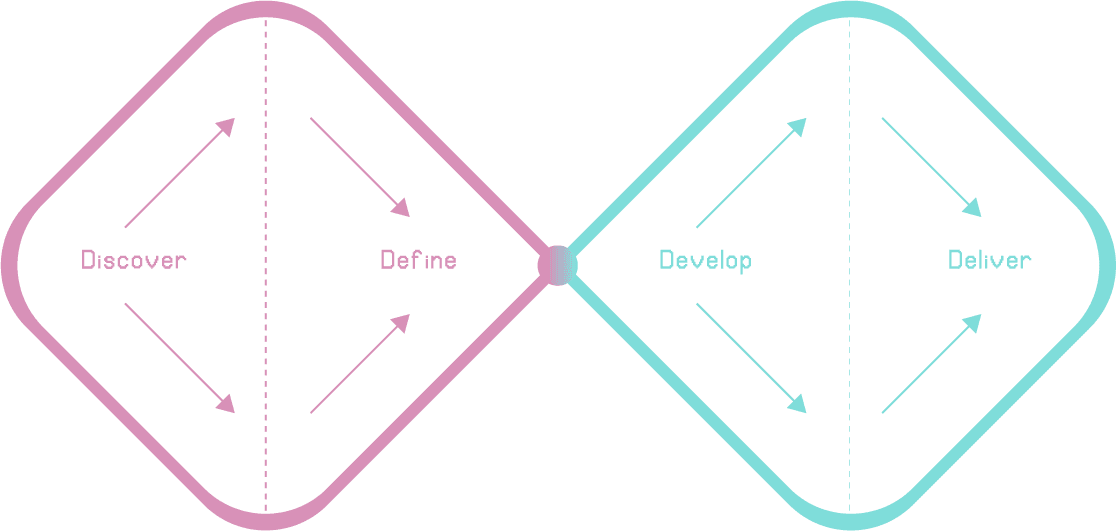
Drawing upon the design process known as the 'Double Diamond', I conducted interviews and workshops with the target audience and subject matter experts, alongside research in books and articles, which informed me in my development of several concepts that got evaluated, prototyped, and culminating in a final concept.

Drawing upon the design process known as the 'Double Diamond', I conducted interviews and workshops with the target audience and subject matter experts, alongside research in books and articles, which informed me in my development of several concepts that got evaluated, prototyped, and culminating in a final concept.

In the Discovery phase my researched mainly focused on ADHD, but in that I also delved into executive functions, motivation, and of course what solutions exists today.


I conducted interviews with target users as well as had discussions with subject matter experts. I also sent out forms in different channels focusing on ADHD like Facebook groups.


I also got a presentation from Abilia about Gamification, due to it being very helpful for motivation, especially for people with ADHD.

Show More

In the Discovery phase my researched mainly focused on ADHD, but in that I also delved into executive functions, motivation, and of course what solutions exists today.

Show More

In the Discovery phase my researched mainly focused on ADHD, but in that I also delved into executive functions, motivation, and of course what solutions exists today.

Show More

In the Develop phase I conducted workshops, sketches and prototypes. I evaluated them before reaching the resulting design.


The workshops helped the direction for the project, and was conducted in multiple instances with different constellations, like fellow industrial design students, target audience, a occupational therapist and the team from Abilia.


I mainly worked on sketching and prototyping in Rhino3D and cardboard prototypes, to get a sense of scale and movability.

Show More

In the Develop phase I conducted workshops, sketches and prototypes. I evaluated them before reaching the resulting design. I mainly worked on sketching and prototyping in Rhino3D and cardboard prototypes, to get a sense of scale and movability.

Show More

In the Develop phase I conducted workshops, sketches and prototypes. I evaluated them before reaching the resulting design. I mainly worked on sketching and prototyping in Rhino3D and cardboard prototypes, to get a sense of scale and movability.

Show More

Result

Result

UID24 - Degree Show

UID24 - Degree Show

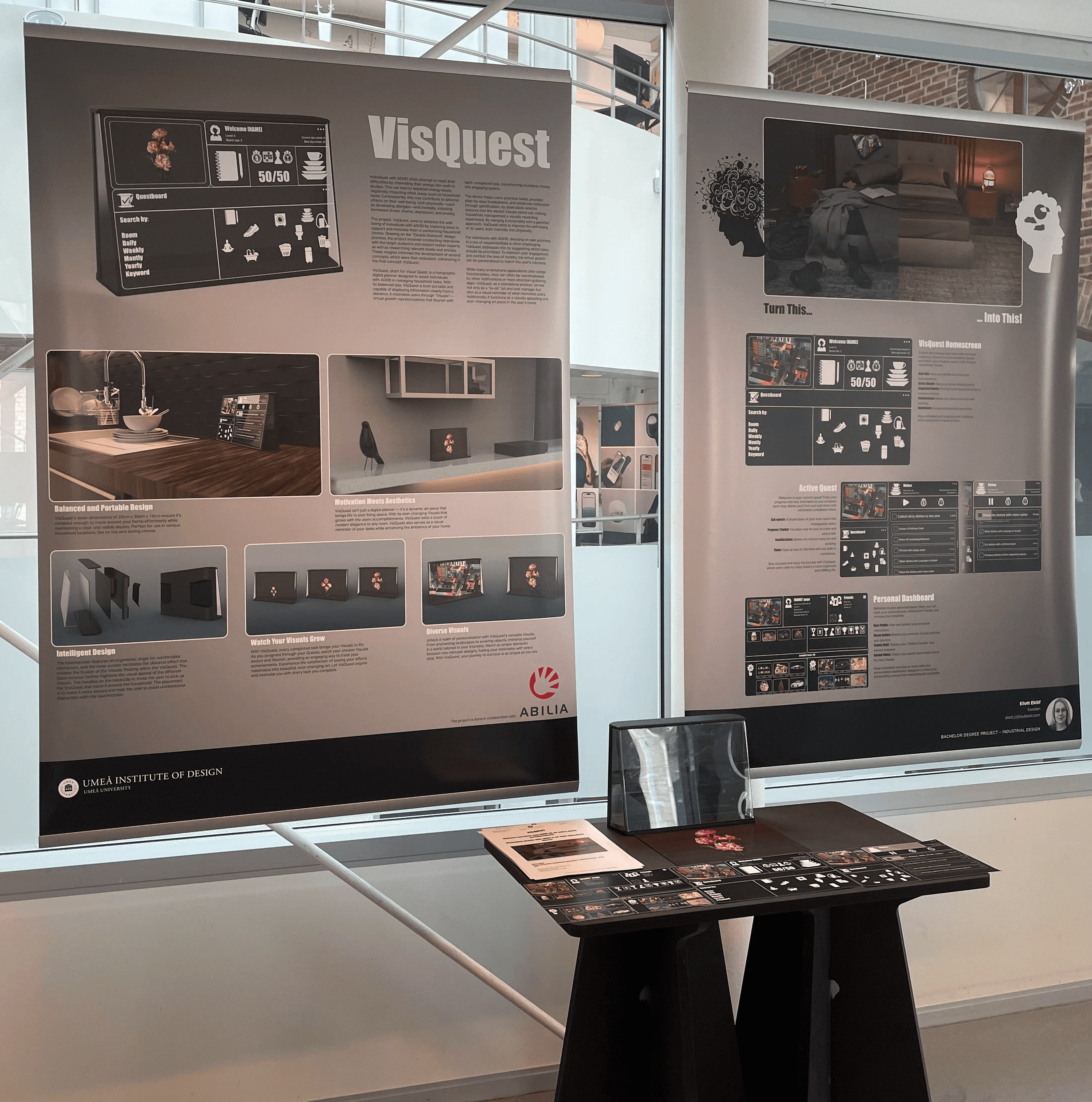
The result was presented during UID24, Umeå Institute of Designs event where all graduating students exhibits and pitches their graduation projects for attending companies. Here you can see my 3 minutes pitch for VisQuest.
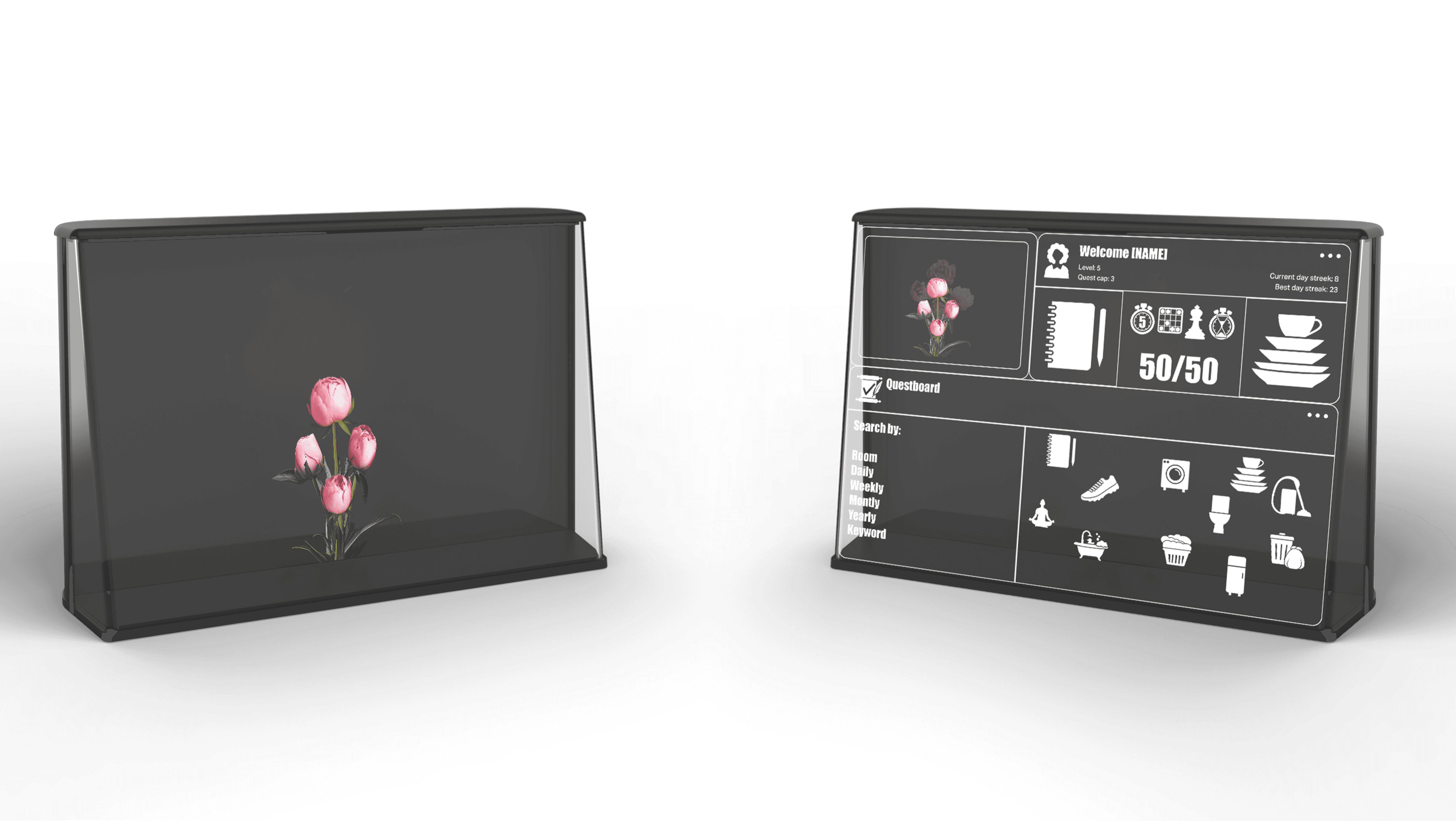
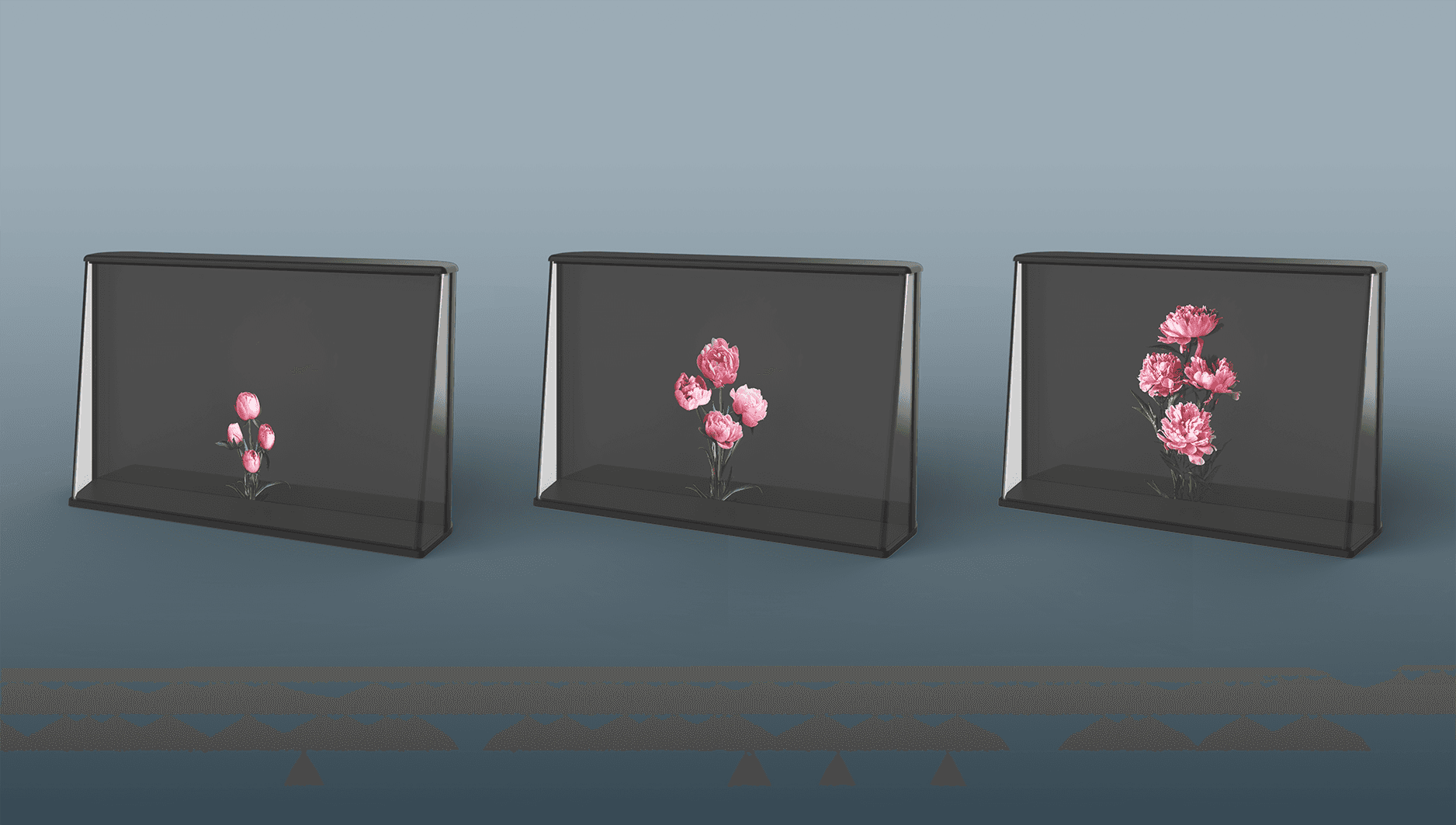
VisQuest, short for Visual Quest, is a 'holographic digital planner' designed to assist individuals with ADHD in managing household tasks. With its balanced size, VisQuest is both portable and capable of displaying information clearly from a distance. It motivates users through “Visuals”— virtual growth representations that flourish with each completed task, transforming mundane chores into engaging quests.

The device helps users prioritize tasks, provides step-by-step breakdowns, and enhances motivation through gamification. Its sleek black exterior ensures that the vibrant Visuals stand out, making household management a visually rewarding experience. By merging functionality with a gamified approach, VisQuest aims to improve the well-being of its users, both mentally and physically.

For individuals with ADHD, deciding on task priorities in a sea of responsibilities is often challenging. VisQuest addresses this by suggesting which tasks should be prioritized. To maintain user engagement and combat the loss of novelty, the virtual growth can be personalized to match the user’s interests.

While many smartphone applications offer similar functionalities, they can often be overshadowed by other notifications or more attention-grabbing apps. VisQuest, as a standalone product, serves not only as a “to-do” list and task manager but also as a visual reminder of what motivates users. Additionally, it functions as a visually appealing and ever-changing art piece in the user’s home.

Exterior

Exterior

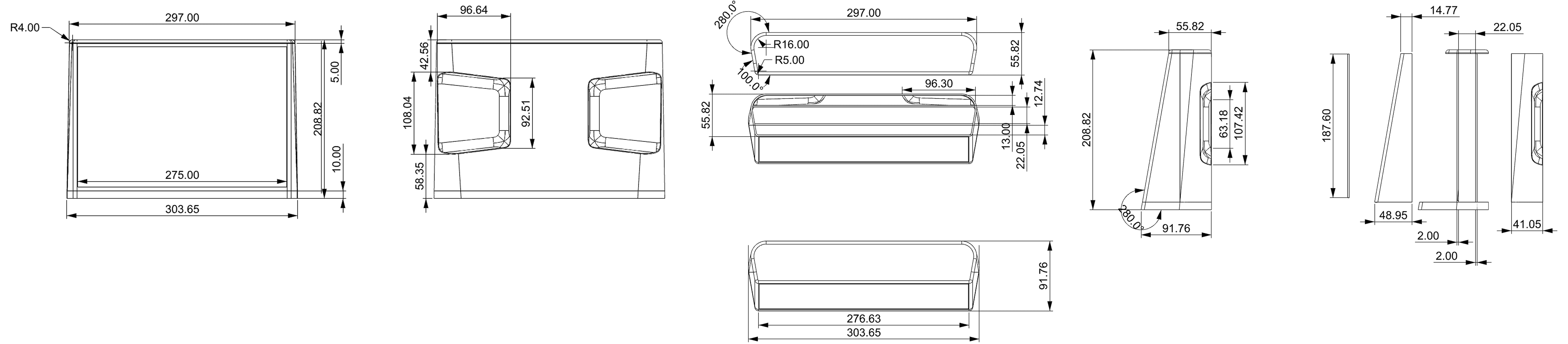
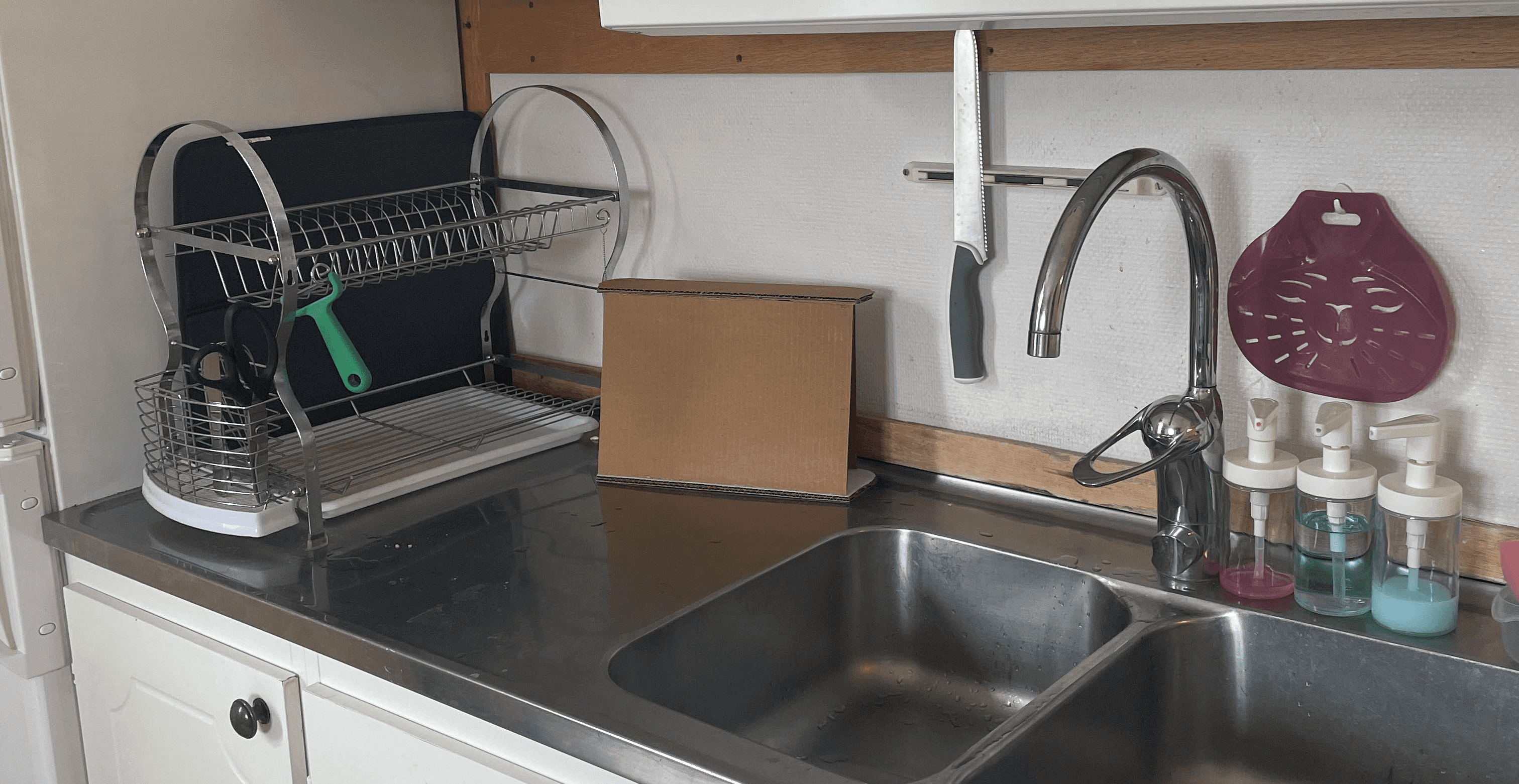
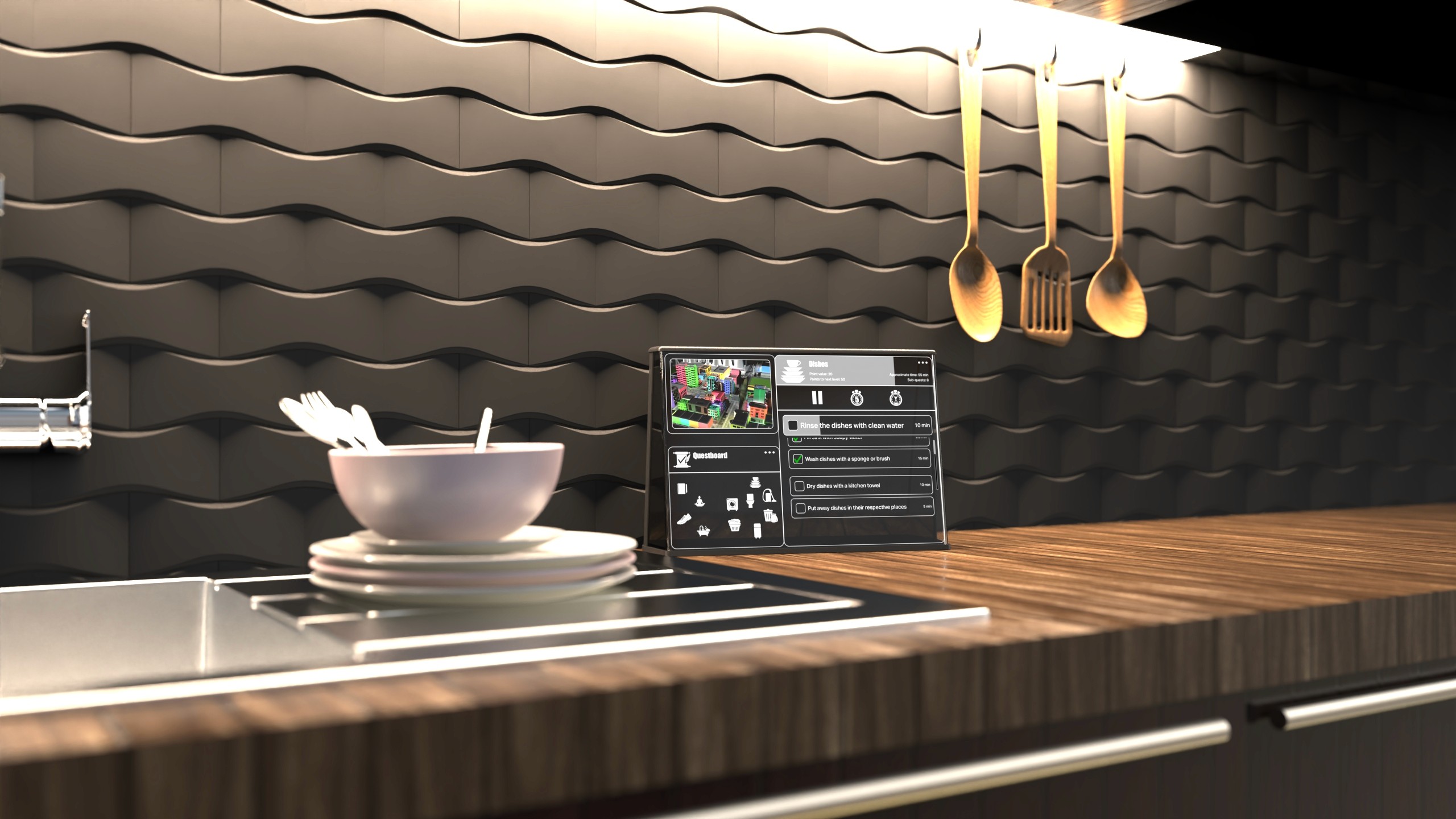
VisQuest’s sleek dimensions ensure it’s compact enough to move around your home effortlessly while maintaining a clear and visible display. Perfect for use in various household locations, like on the sink during chores.


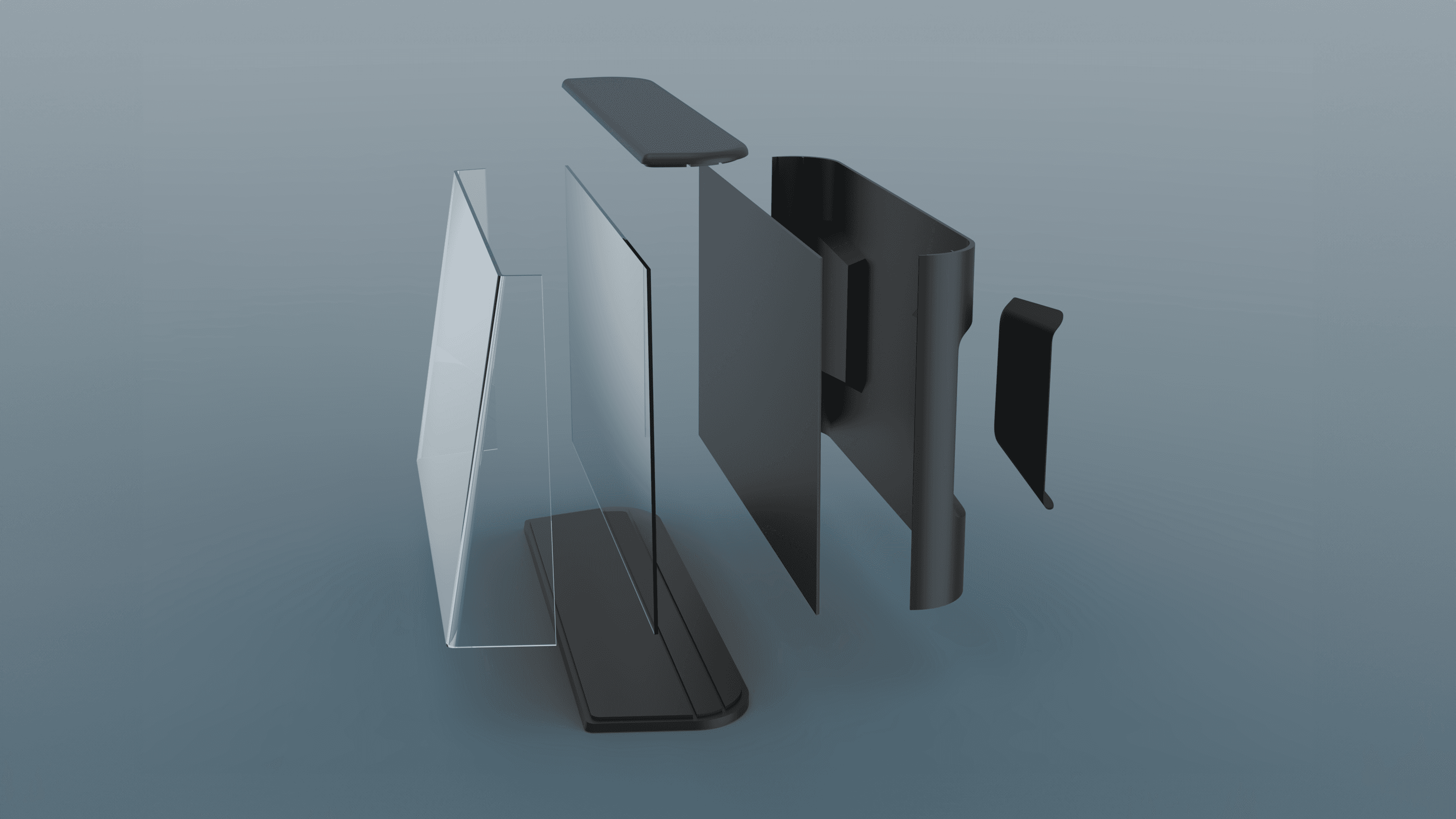
The touchscreen features an ergonomic angle for comfortable interaction, and the inner screen facilitates the diorama effect that creates the illusion of the Visuals floating within the VisQuest.


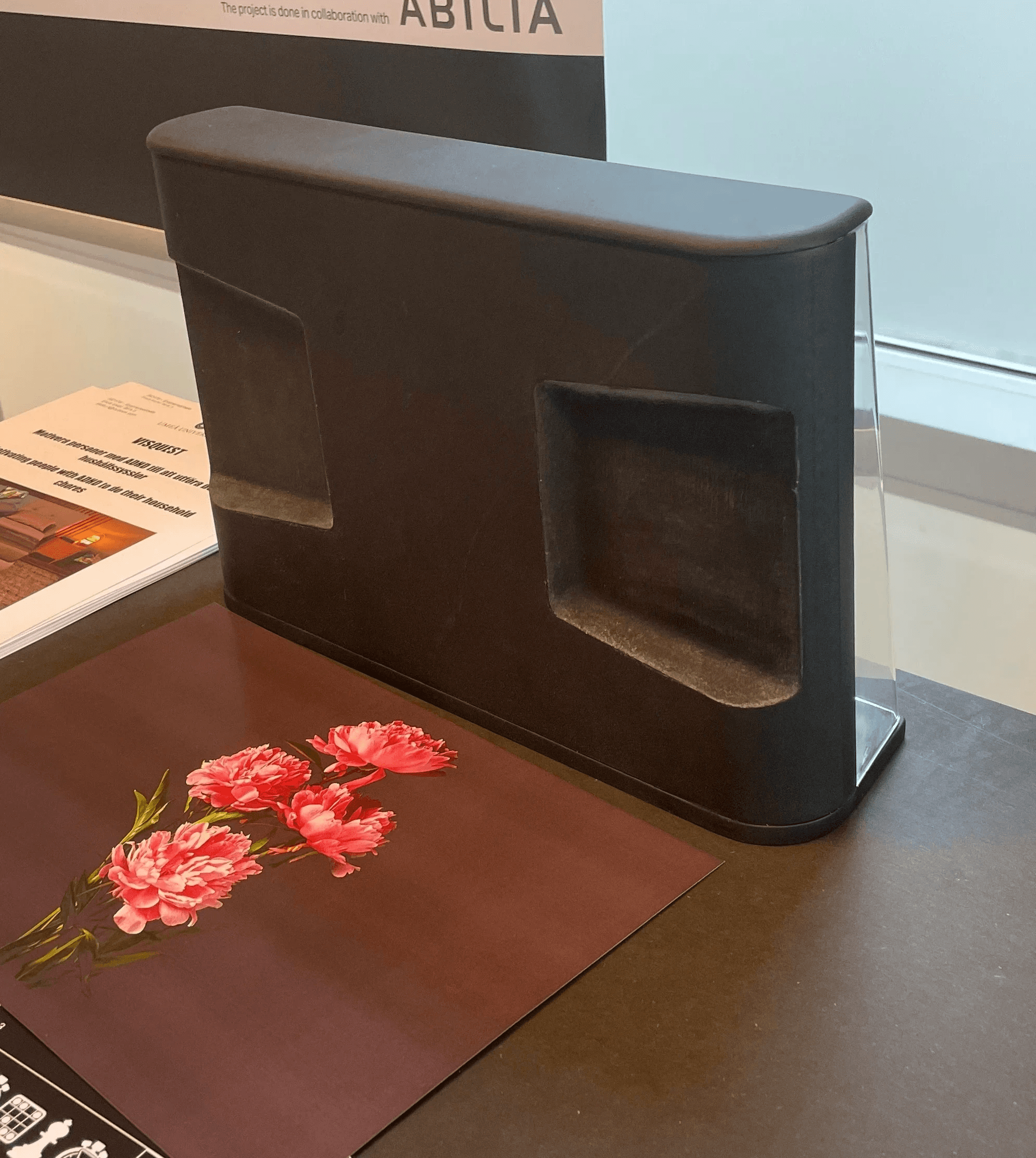
The black exterior further hightens the visual appeal of the different Visuals. The handles on the backside to invite the user to pick up the VisQuest and move it around the household. The placement is to make it more secure and help the user to avoid unintentional interaction with the touchscreen.
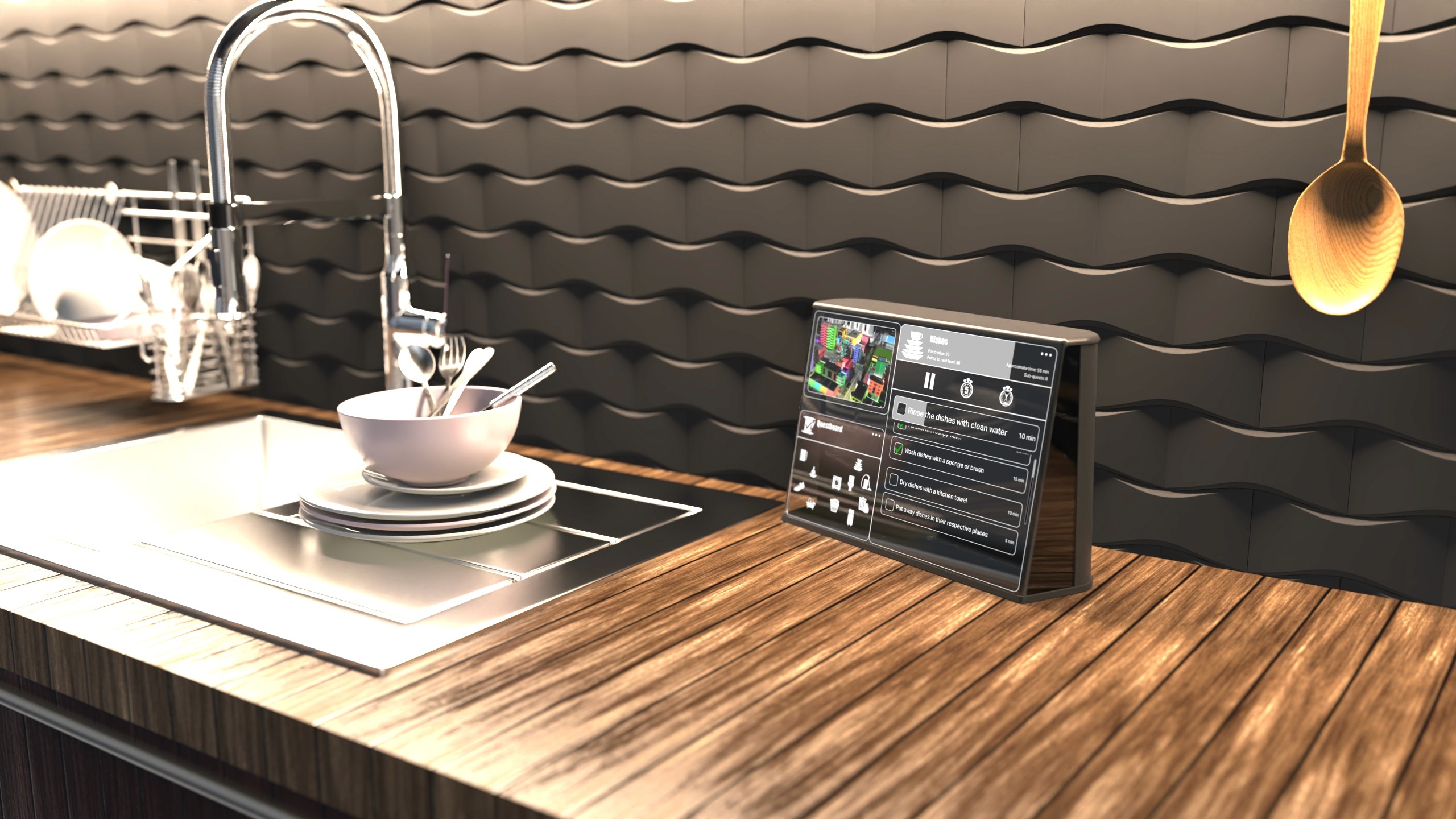
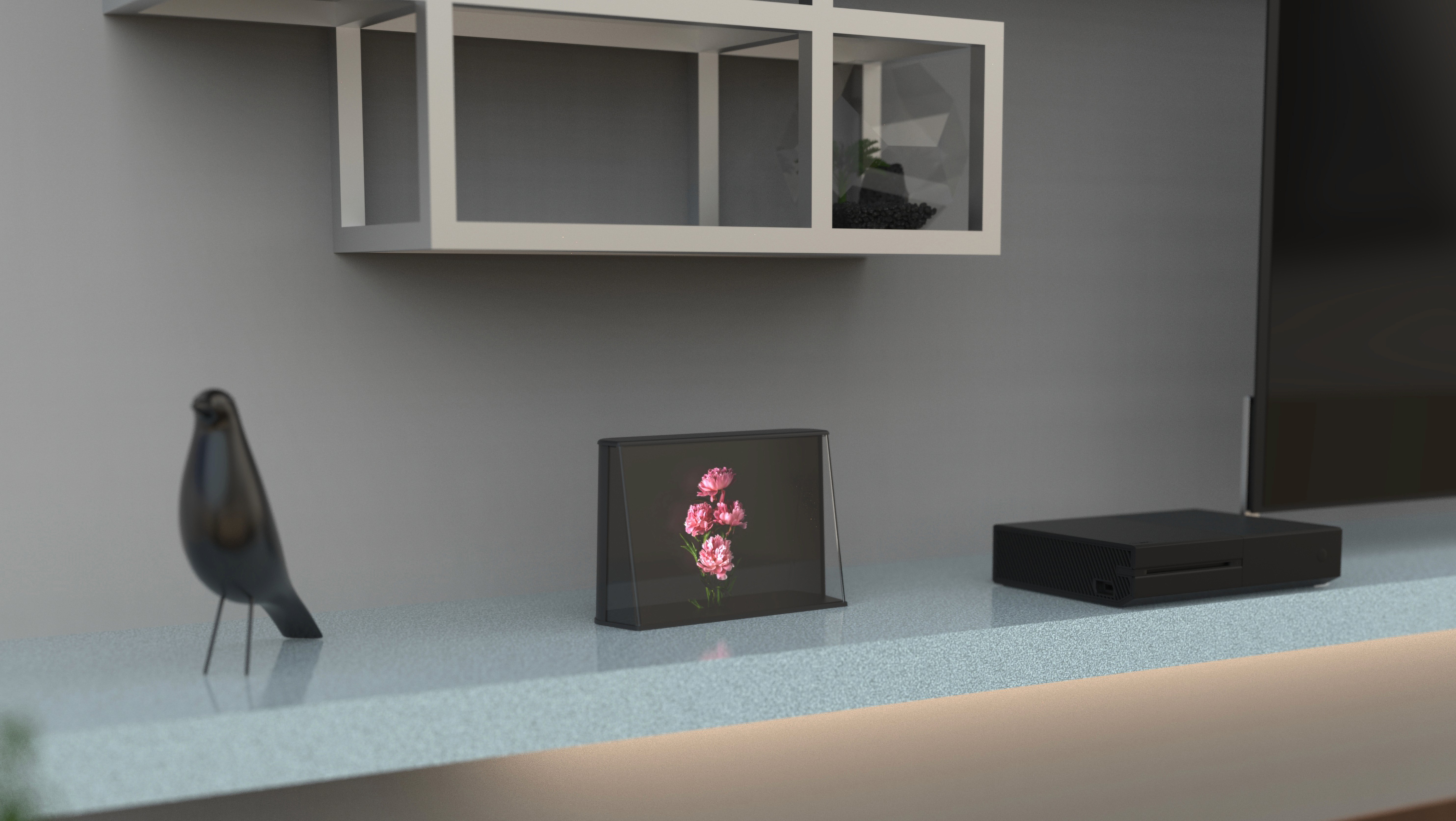
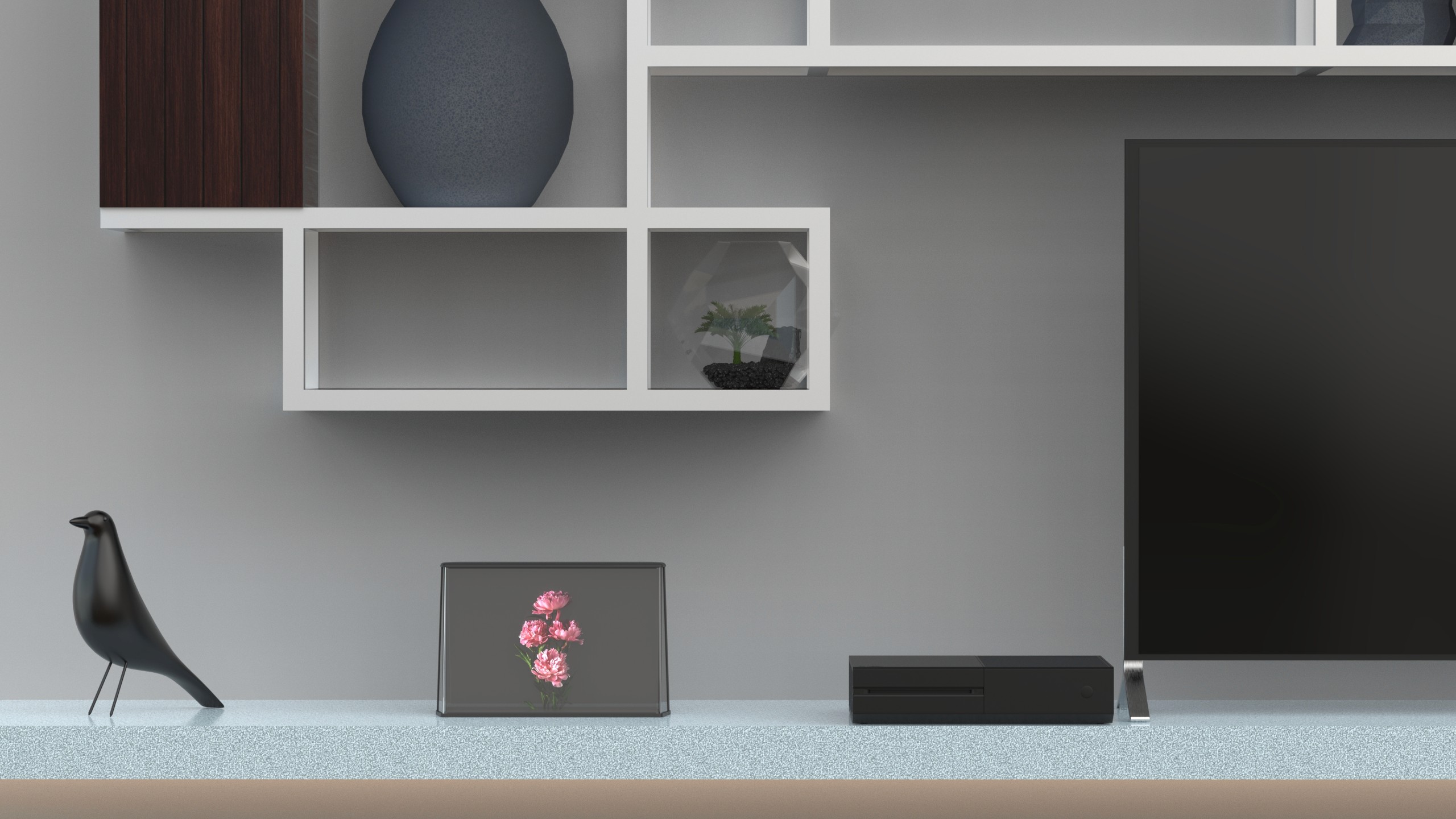
When it's not in active use the VisQuest can be placed openly on a bookshelf, as the Visuals both works as an evolving art piece that grows with the users progress on their quests, as well as a visual reminder and a motivator to do the quests. It was important to me that the result wasn't something that would be stored away and forgotten by the user, as many said that a problem with the aiding tools is that they were forgotten.

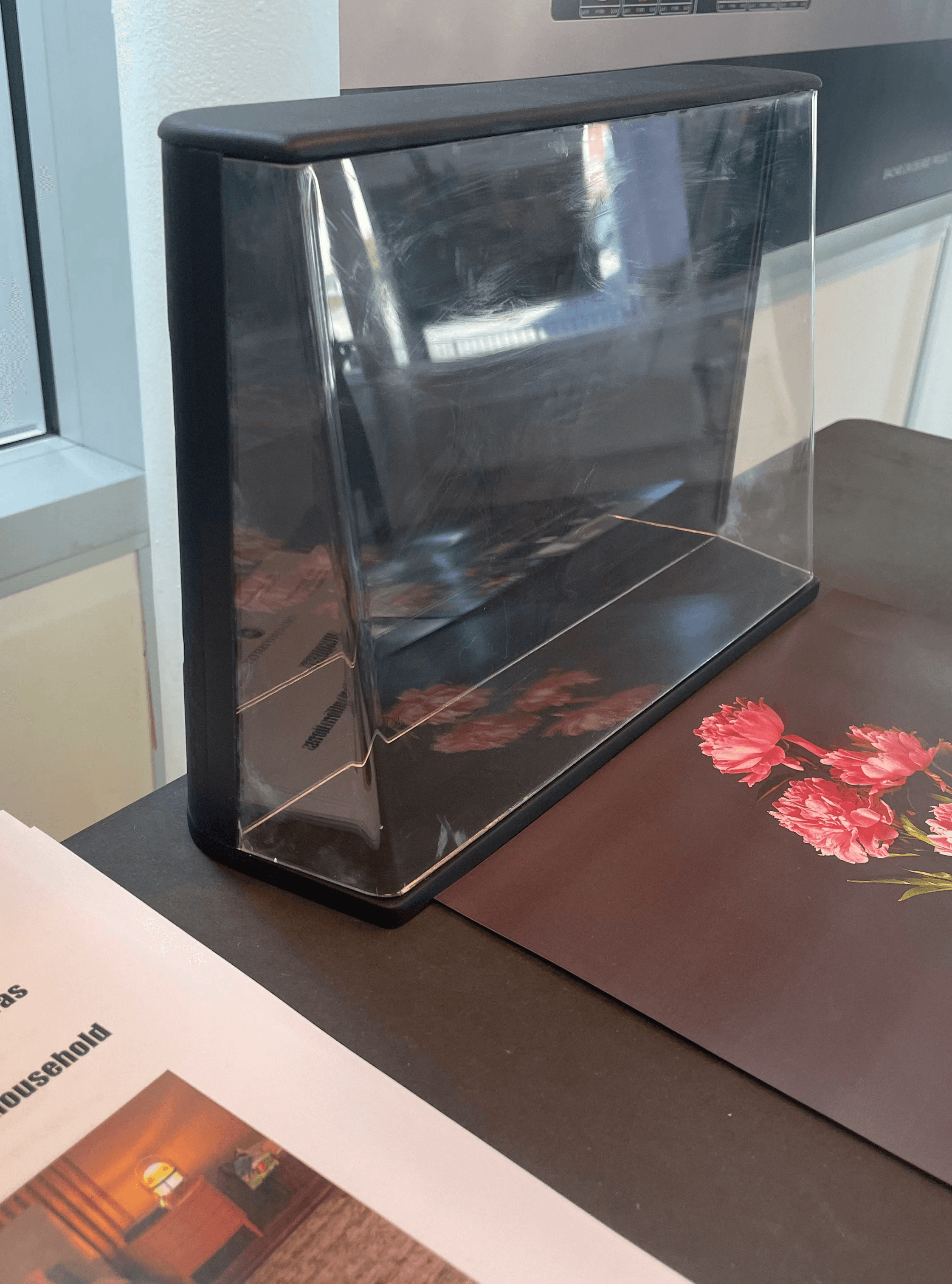
For the UID24 event we also had our own stands where we showed off our workshop prototypes. I made the prototype with 3D printing in different forms, as well as CNC milling and forming a plastic sheet with a hot air gun.


I also made a cardboard prototype to test the size and feel in my home.
UI

UI

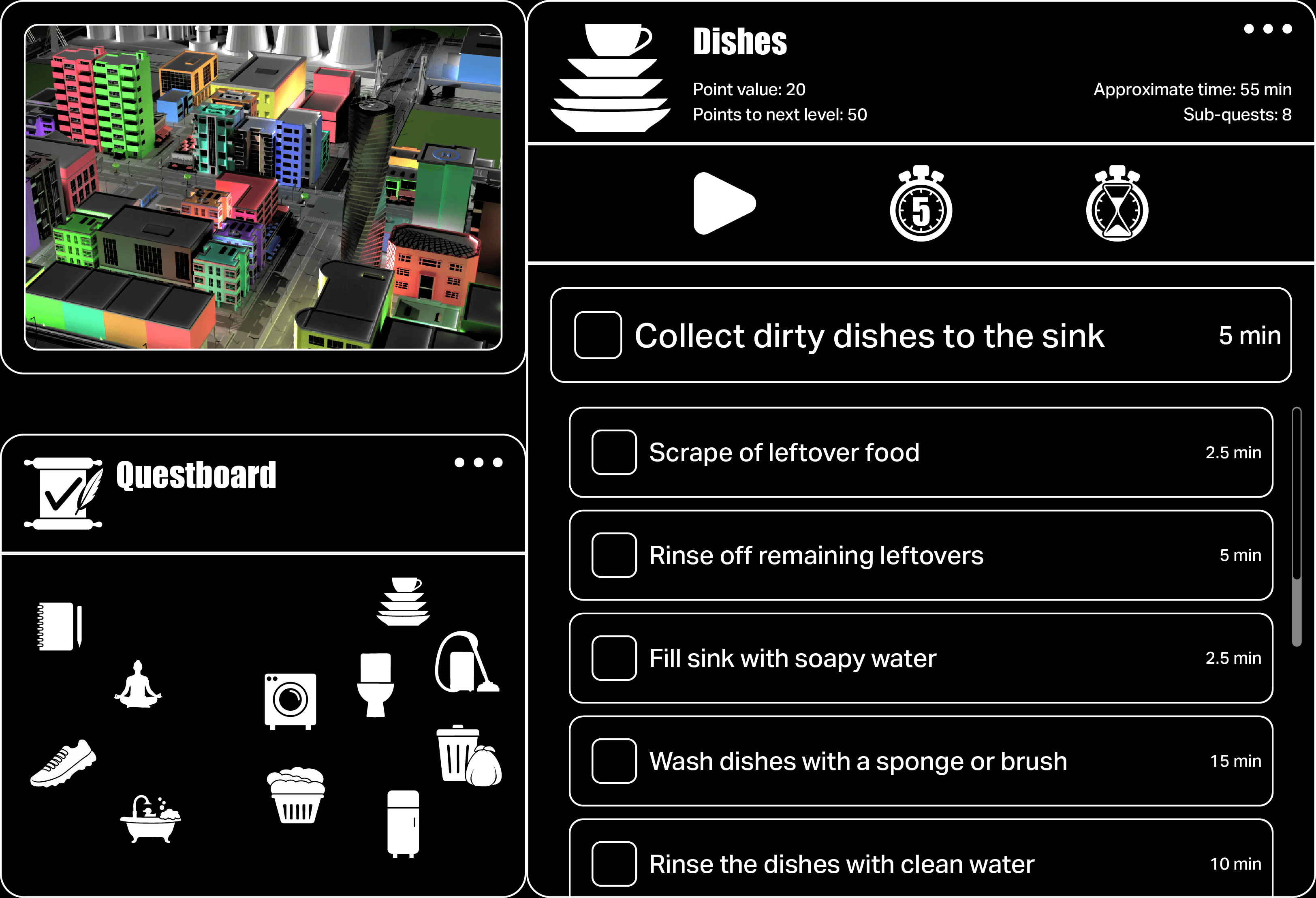
The homepage shows everything necessary for starting a task, which is called 'Quests'. The top part of the screen shows a preview of the active Visual, the users statistics, two prioritized tasks as well as the gamifications.

While using VisQuest the user will level up, and while leveling up the Quest Cap will get higher as well. The Quest Cap


The bottom part shows the 'Questboard', which is a overview of the prioritized quests and allows the user to find any specific quest.

The homepage shows everything necessary for starting a task, which is called 'Quests'. The top part of the screen shows a preview of the active Visual, the users statistics, two prioritized tasks as well as the gamifications.

While using VisQuest the user will level up, and while leveling up the Quest Cap will get higher as well. The Quest Cap


The bottom part shows the 'Questboard', which is a overview of the prioritized quests and allows the user to find any specific quest.

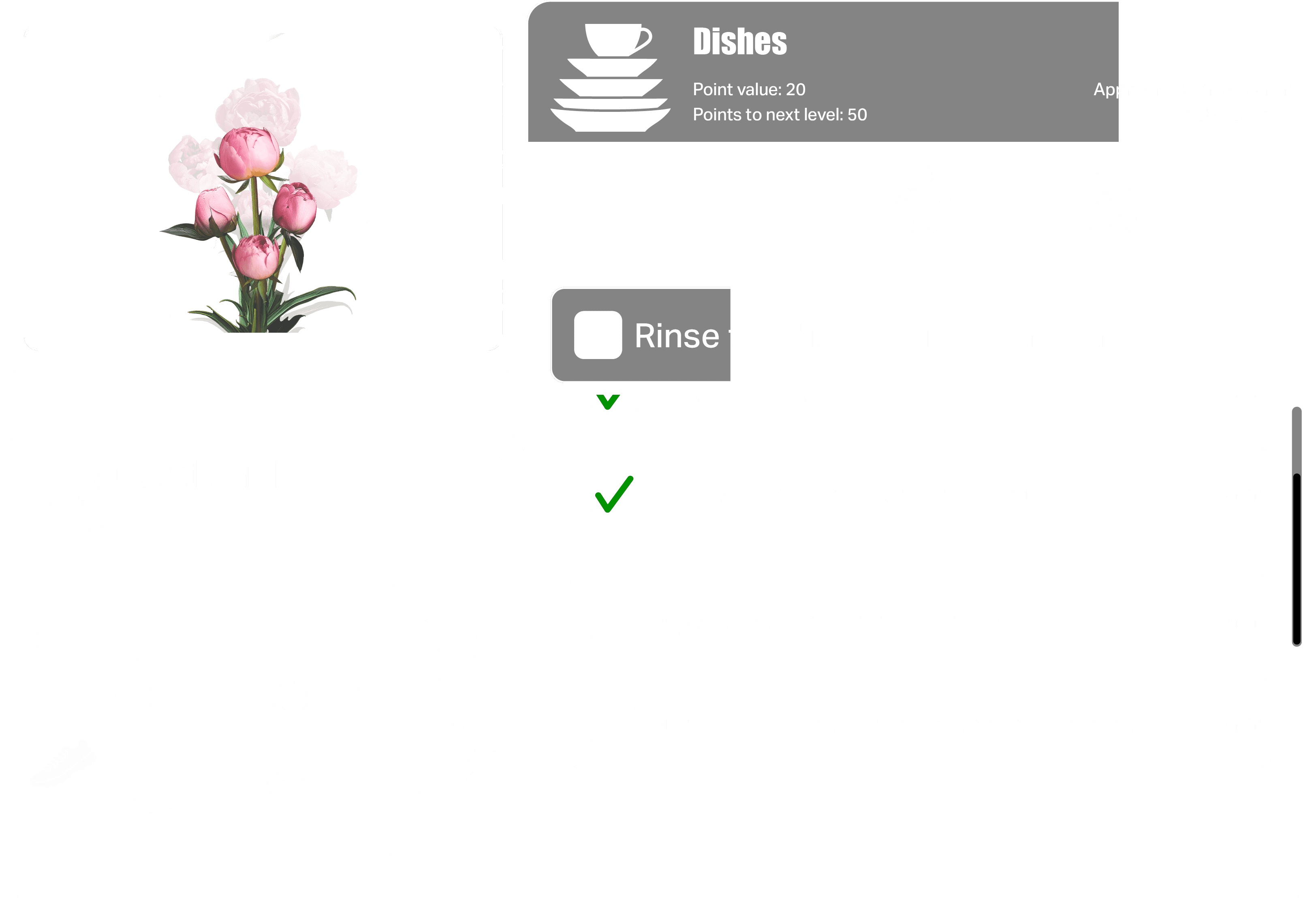
When opening a quest the user gets an overview of the quest, including the different subquest, points value that the user earns after finishing the quest, estimated time the quest will take, and the gamifications that can be started from within the quest.


The current subquest is at the top of the list of subquests and will always be visible when scrolling.

The homepage shows everything necessary for starting a task, which is called 'Quests'. The top part of the screen shows a preview of the active Visual, the users statistics, two prioritized tasks as well as the gamifications.

While using VisQuest the user will level up, and while leveling up the Quest Cap will get higher as well. The Quest Cap


The bottom part shows the 'Questboard', which is a overview of the prioritized quests and allows the user to find any specific quest.

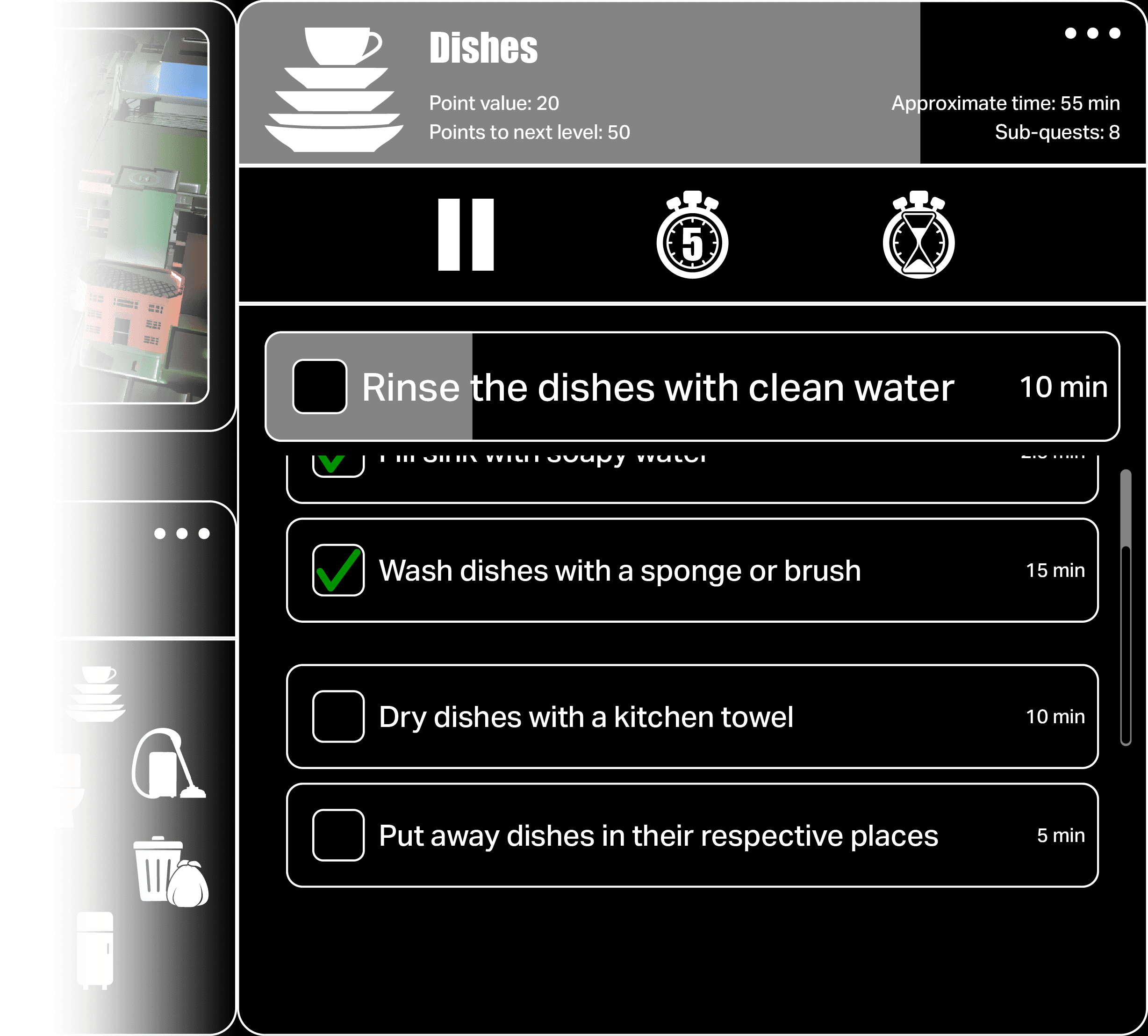
When the quest has started the top part showing the quest will fill up bit by bit with every completed subquest, helping to visualize how far along the quest the user has come. In the same vein, the current active subquest will fill up over time based on the estimated time for that subquest, helping with time management and visualizing the flow of time.

The homepage shows everything necessary for starting a task, which is called 'Quests'. The top part of the screen shows a preview of the active Visual, the users statistics, two prioritized tasks as well as the gamifications.

While using VisQuest the user will level up, and while leveling up the Quest Cap will get higher as well. The Quest Cap


The bottom part shows the 'Questboard', which is a overview of the prioritized quests and allows the user to find any specific quest.

Figma Prototype

Figma Prototype

When I realized that Figma prototypes works on iPad, I reworked some of the scaling and assets to fit to my iPads screen size. The original screen size of the VisQuest is not based on any pre-existing screen size. It's still a work in progress, and my goal is to be able to make it in Unity to test it out on my iPad in the long run, as VisQuest is aimed towards longterm use in a way Figma Prototyping can't test out.

Back to home page ->

Create a free website with Framer, the website builder loved by startups, designers and agencies.